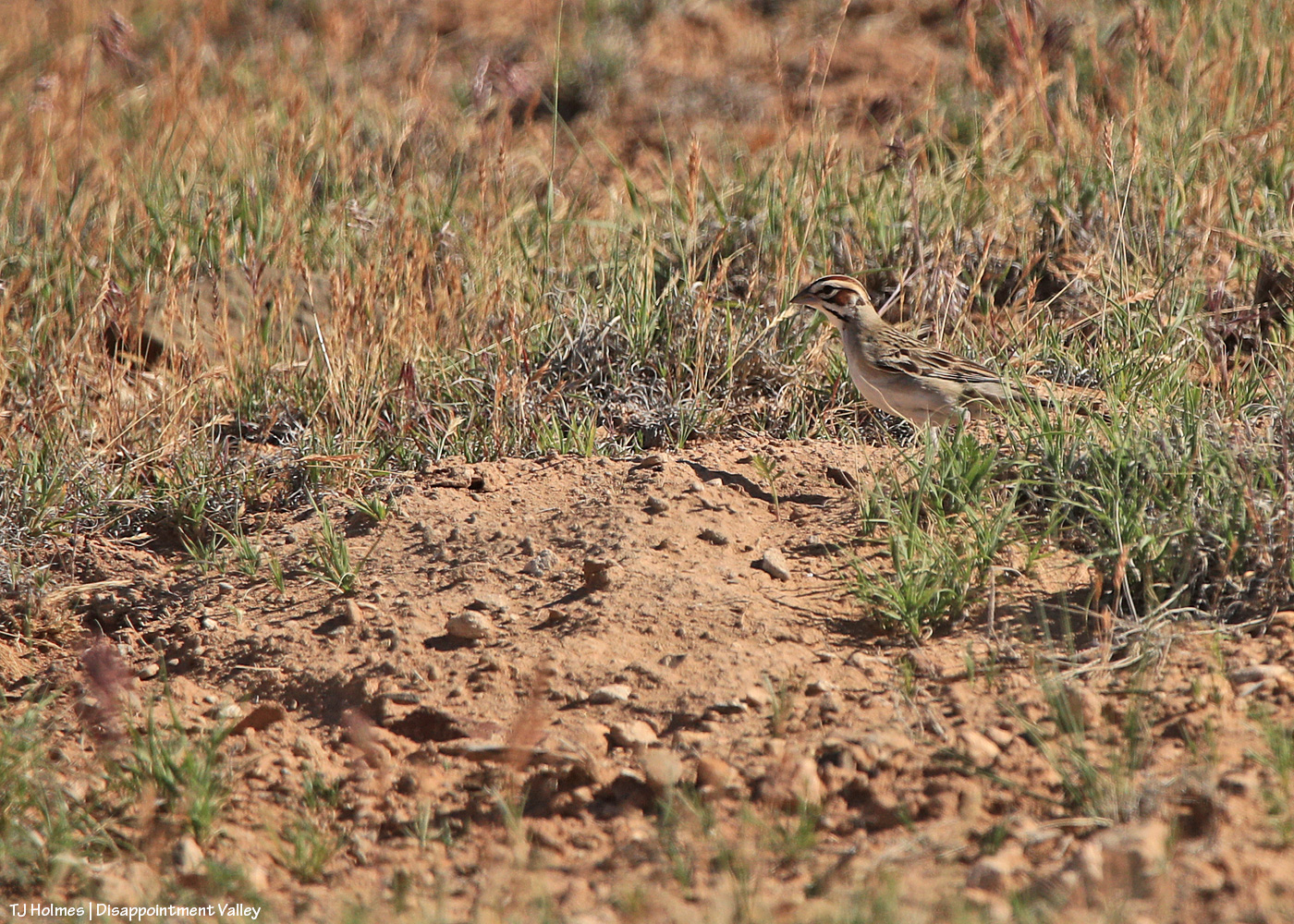
Yesterday morning, I spotted this handsome lark sparrow foraging on the ground near a road. Merlin helped me identify it by its song (and that of others nearby), and isn’t it a lovely little bird! I particularly love this description from Cornell’s All About Birds website: “This large sparrow may be brown, but its harlequin facial pattern and white tail spots make it a standout among sparrows. Males sing a melodious jumble of churrs, buzzes, and trills reminiscent of an Old World lark.” I’m not sure what an “Old World lark” sounds like, but I did enjoy listening to the variety of trills from a variety of birds!
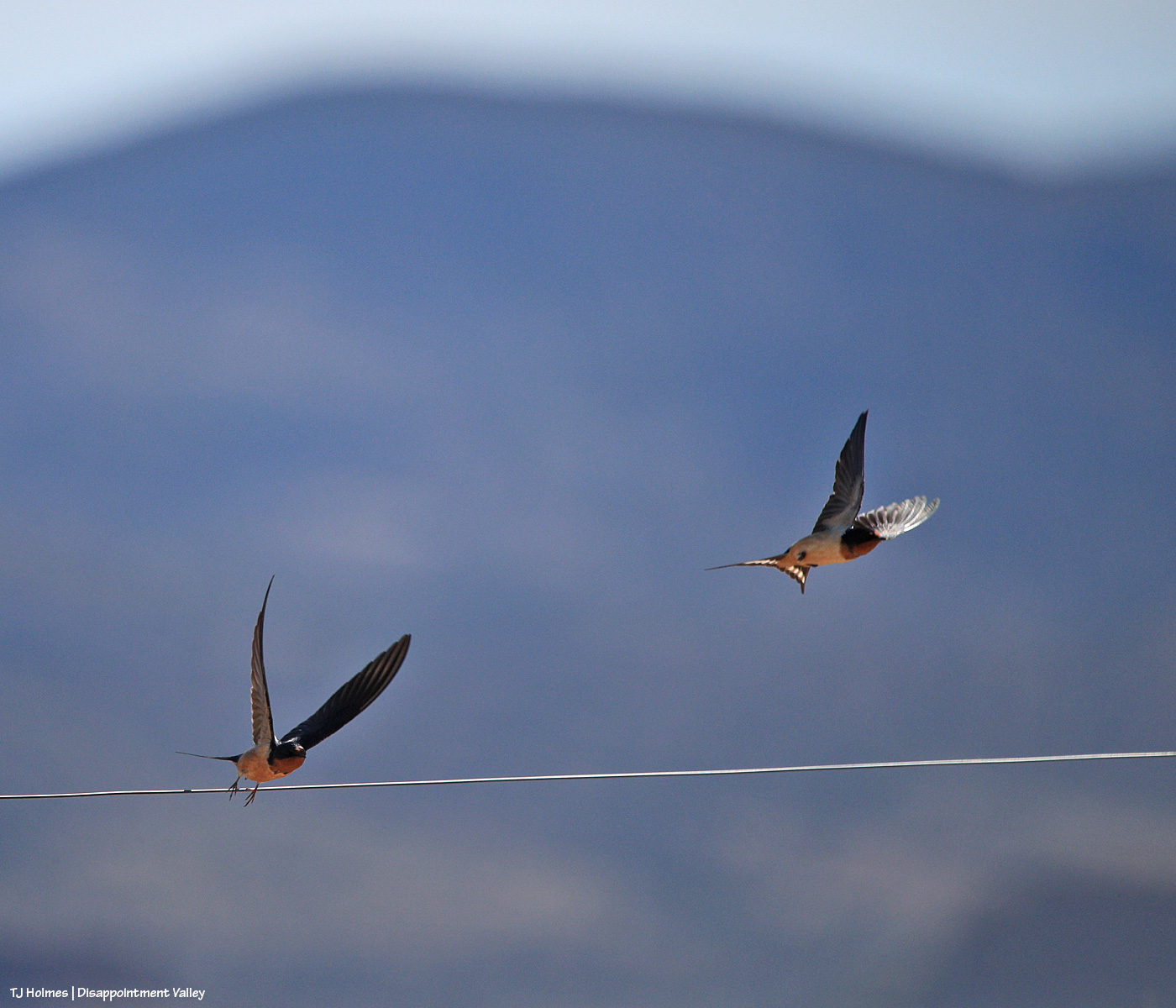
I also saw these lovelies swooping and soaring and preening on a fence wire:
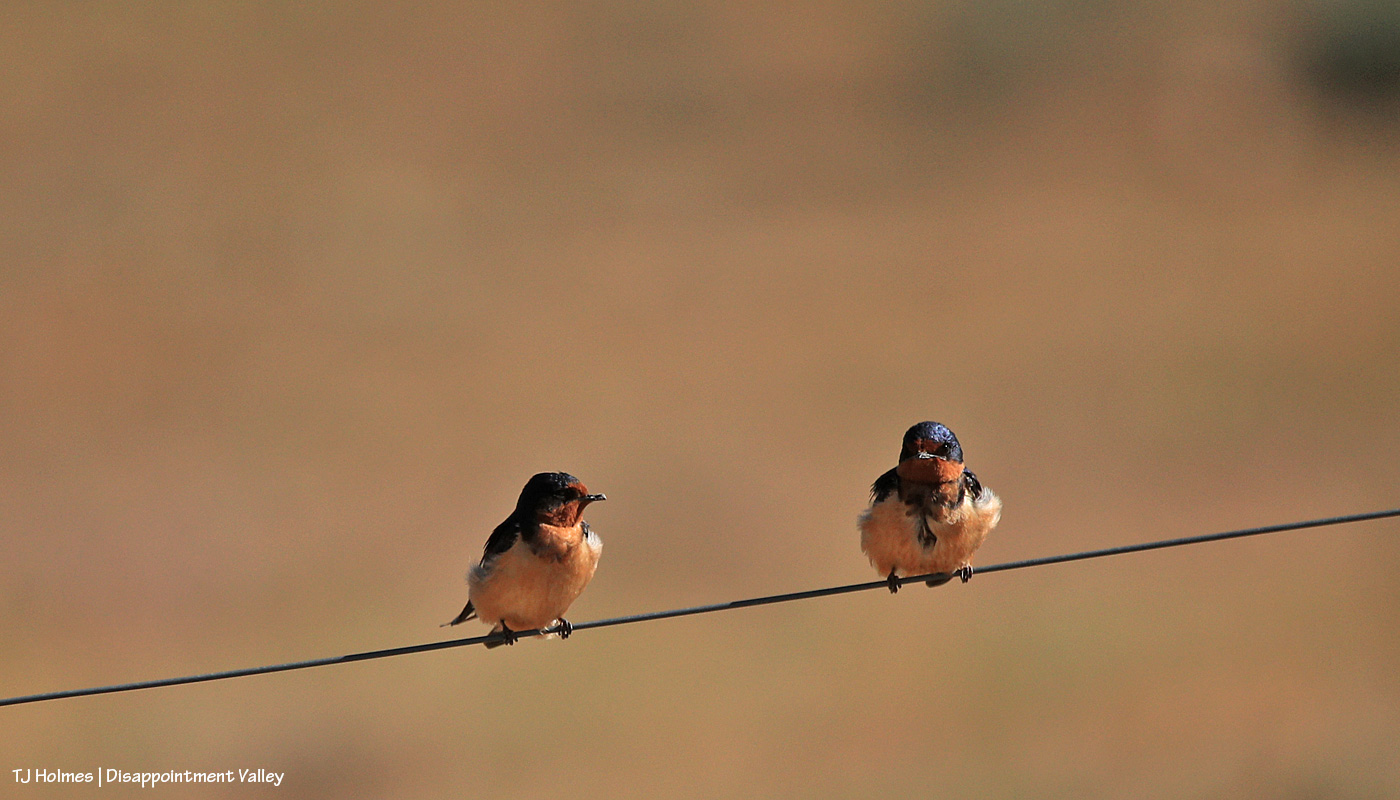
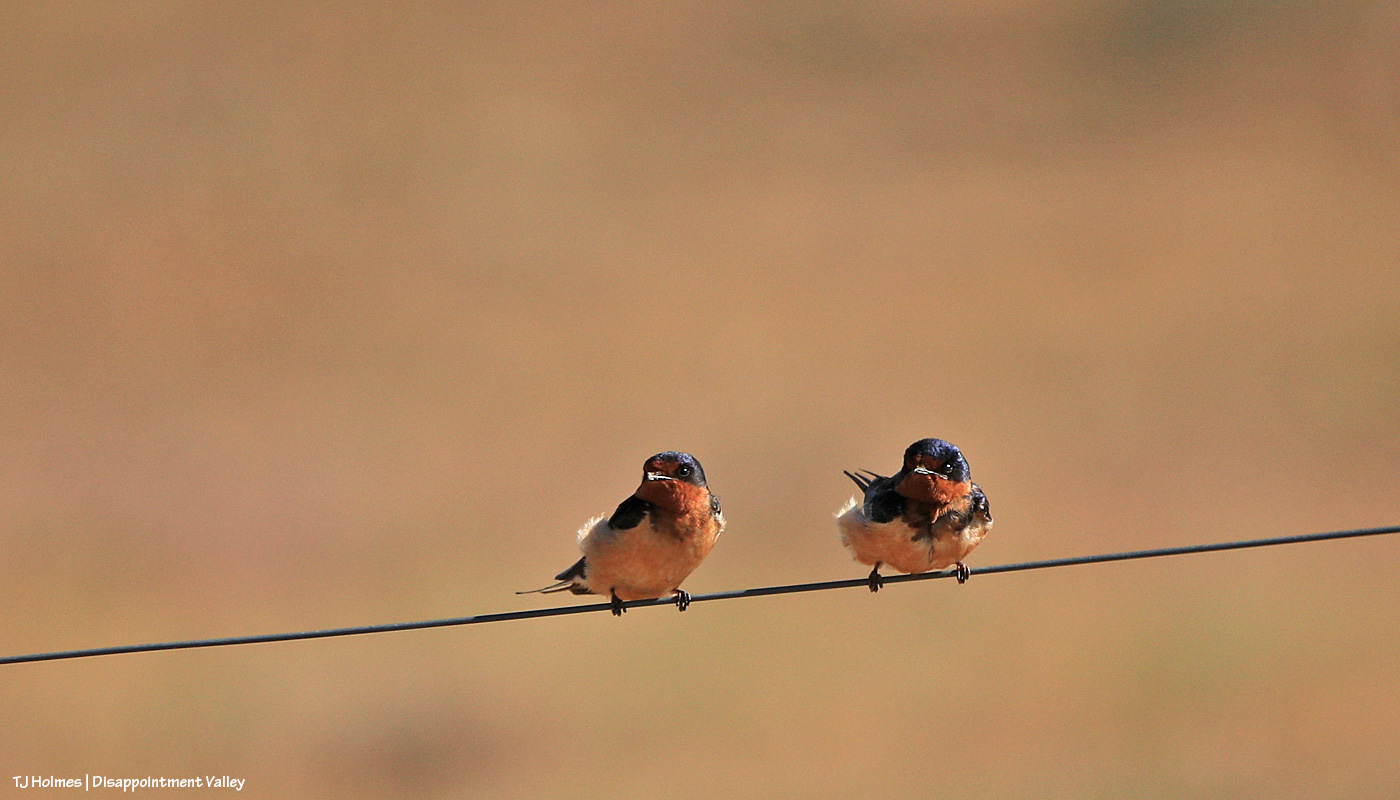
I wish I’d caught the “sidle closer” steps as the bird on the right moved closer to its friend. (I *think* these are both males, but I’d love to be corrected?)
All About Birds says this about them: “You can find the adaptable Barn Swallow feeding in open habitats from fields, parks, and roadway edges to marshes, meadows, ponds, and coastal waters. Their nests are often easy to spot under the eaves or inside of sheds, barns, bridges and other structures.”
They use mud to build their nests, and we’re a bit in short supply of mud at the moment. Though Disappointment Creek wasn’t too far away as the sparrow dives, so hopefully that mud is close (enough) at hand (err, wing).
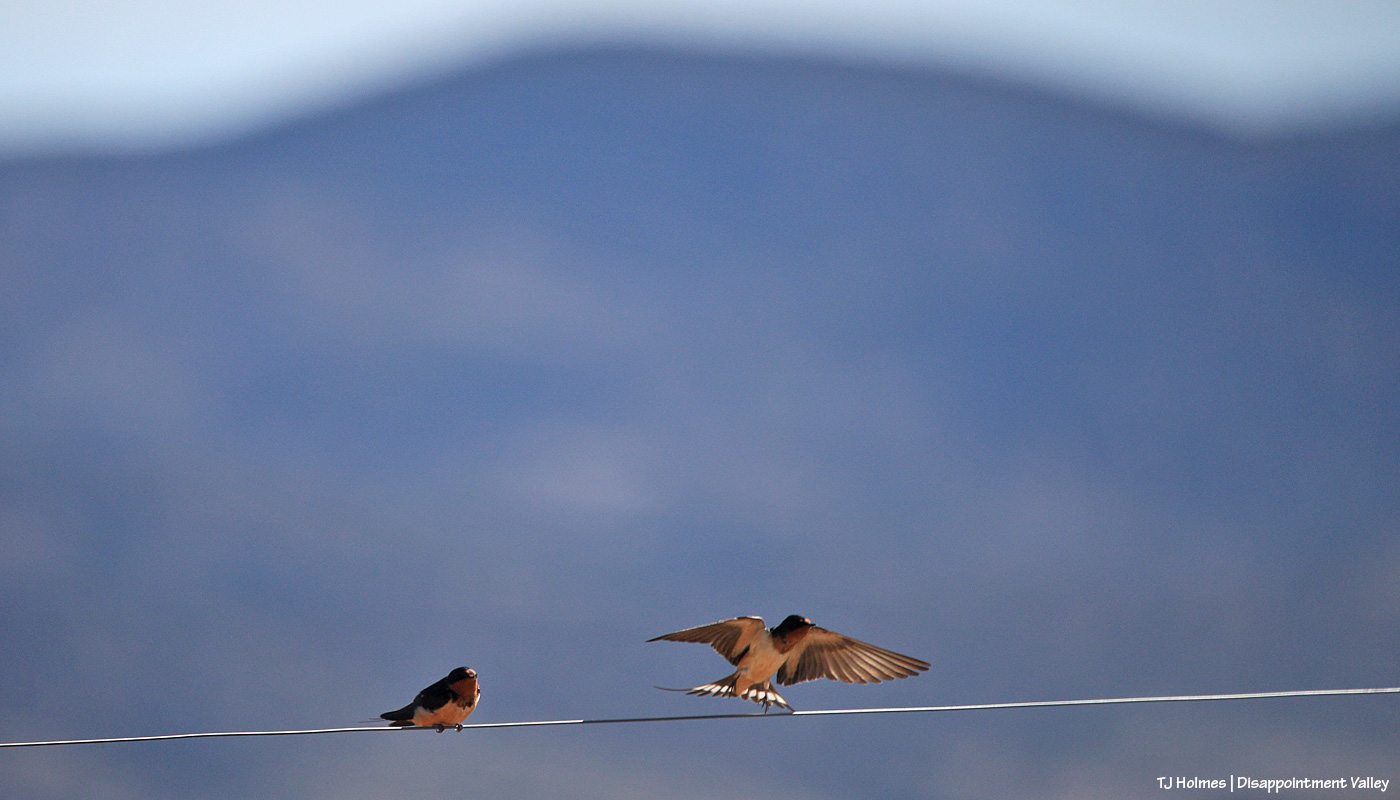
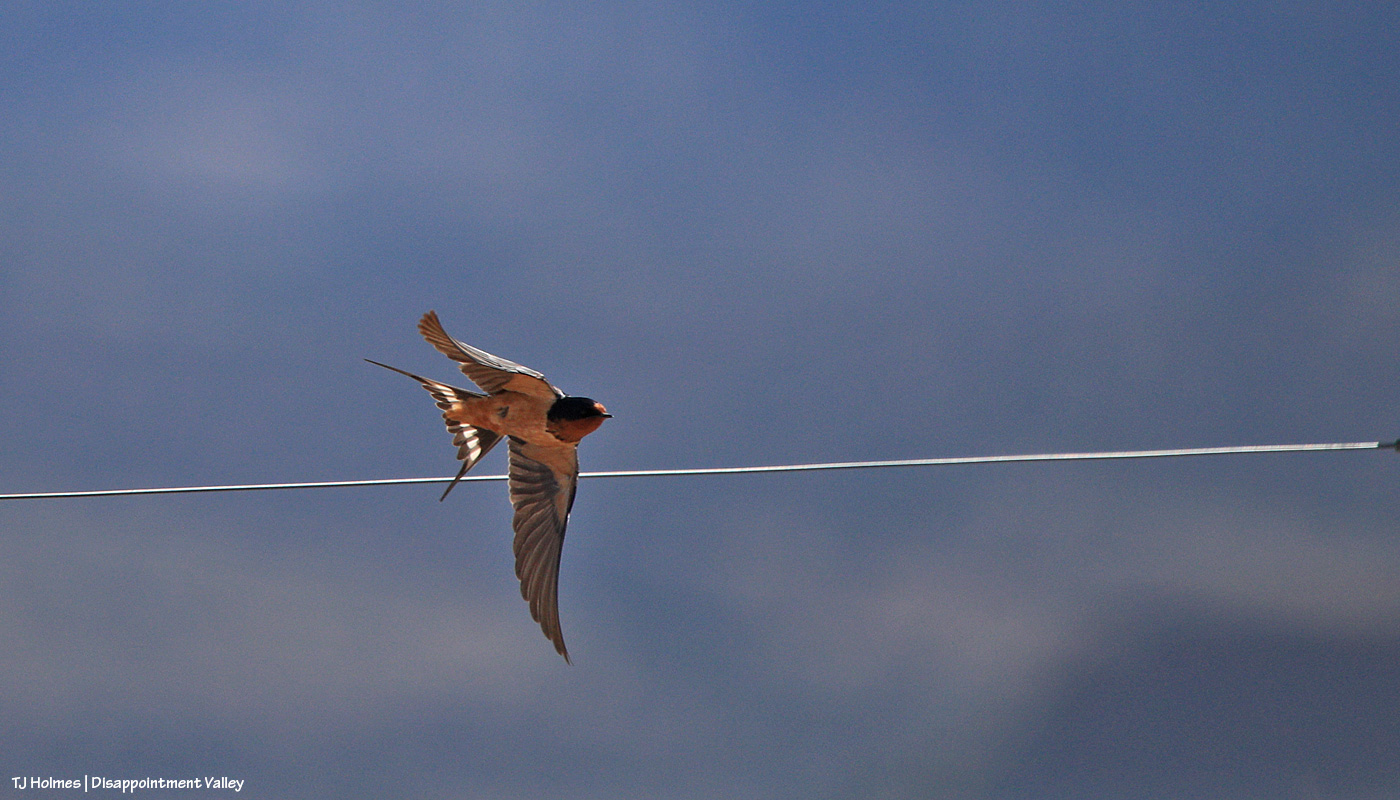
A different pair, taken from the same place just a bit farther along on the same fence wire.
Aren’t they magnificent? Cornell says they’re the most abundant and widely distributed swallow species in the world, but that doesn’t stop them from being simply stunning little birds.
A couple of interesting facts (among a few), also from All About Birds:
- Although the killing of egrets is often cited for inspiring the U.S. conservation movement, it was the millinery (hat-making) trade’s impact on Barn Swallows that prompted naturalist George Bird Grinnell’s 1886 Forest & Stream editorial decrying the waste of bird life. His essay led to the founding of the first Audubon Society.
- According to legend, the Barn Swallow got its forked tail because it stole fire from the gods to bring to people. An angry deity hurled a firebrand at the swallow, singeing away its middle tail feathers.
What do they eat? “Barn Swallows feed on the wing, snagging insects from just above the ground or water to heights of 100 feet or more.” With gnat season upon us, feed, swallows, feed on those wings! 🙂


Fascinating!!
Mother Nature provides endless fascinations! 🙂
Magnificent bird photos, TJ! We’ve had those lark sparrows visit us occasionally and I always love seeing the barn swallows. Besides gnats on the menu, they like other obnoxious things like mosquitos. They’re wonderful to have around! Thanks for the pretty birdie photos!
We may be short of rain (and mud), but we have no shortage ever (why, why?!) of gnats. Some years are worse than others for mosquitos; I’m not sure why? On Merlin, I’ve also picked up “ash-throated flycatchers” and some kind of “gnatcatcher” – “blue-gray gnatcatcher,” maybe? Please, PLEASE help yourselves, dear little birds! The more (birds, that is), the merrier! 🙂
When my kids were little, we had an old barn that the swallows loved. They also loved the pond where they would swoop back and forth in the evenings. The nests? Not so great when you walked under them, but the birds were beautiful.
Ha – that gravity problem is why I’m still stuck on deciding where to place the bat box my parents got me a few Christmases ago. 🙂 The swallows here seem to particularly like the limited culverts under the road and the couple of bridges over Disappointment Creek.
The flight captures are so cool!
I really enjoy listening to the birds in the morning while drinking my tea and on my early morning walks.
Those sound like perfect times to enjoy the birdsong all around you! 🙂 They sure make life sound sweet!
Look at you Miss bird photographer !!! Great shots! Yes those swallows thankfully are super skilled at feeding in flight reducing the insect population dramatically ! Swallows, maybe diff type fly in droves over the river here in the evening. Hundreds ! How cool to see and now learn more about the lark sparrow- new to me so thanks !
They’re a LOT harder than mustangs. 😉 For the swallows, I had to focus on a nearby fence post, then shift my lens to where the birds were on the wire; it wouldn’t otherwise focus on them. Oh, I bet the birds LOVE to swoop and dive over the river. That’s so awesome. 🙂
When I was a kid, we had barn swallow nests in our barn! The barn is gone now! They are still in the area! Love to watch them swoop after bugs in the late afternoon!
Generations of humans … generations of birds. 🙂 That’s too bad about the old barn, but I’m glad the swallows have adapted and are still in the area. 🙂
Love these and the info. We had generations of barn swallows in our stalls . Usually two broods per summer. After our last two horses passed away they came one more year then stopped nest ng in the empty barn the following year. We used to water down the dirt for them to to get mud for their nests. We miss them, and the horses so much… It’s amazing the ecosystem that the horse brought to our farm. Cowbirds, rabbits, snakes, all manner of critters and plants loved the manure and the company.
“It’s amazing the ecosystem that the horse brought to our farm.” Love that! And it’s so true … plus, I think we *notice* more when we’re out all the time caring for our horses (or other critters).